
Choosing the right Charging Station For Ev is no longer a simple matter of finding the highest charging speed. It affects daily reliability, installation cost, vehicle compatibility, energy use, and long-term ownership. A station may promise 22 kW, yet a home electrical system may support far less. That gap matters.
The International Energy Agency reported in its Global EV Outlook 2024 that electric car sales exceeded 14 million worldwide in 2023. Public charging points also increased by more than 40%, while fast-charging availability expanded rapidly. These figures show strong market momentum, but they also reveal a practical challenge: drivers need dependable access, not merely more hardware. As IEA Executive Director Dr. Fatih Birol stated, “The global revolution in electric vehicles is unstoppable.” Charging infrastructure must therefore keep pace with real driving habits.
A credible choice begins with verified specifications. Check connector type, charging output, weather protection, cable length, software support, and electrical safety certification. Look for load management, especially when several appliances share one circuit. NREL research also highlights the importance of charger uptime and convenient placement for public charging networks. A broken station beside a busy highway is still useless.
The best option depends on context. A compact 7 kW unit may suit overnight home charging, while a fleet may require networked 50 kW or higher equipment. Sometimes, the most expensive station is unnecessary. Sometimes, the cheapest becomes costly through repairs, poor support, or limited compatibility. Careful comparison, professional installation, and evidence-based specifications create a safer decision.
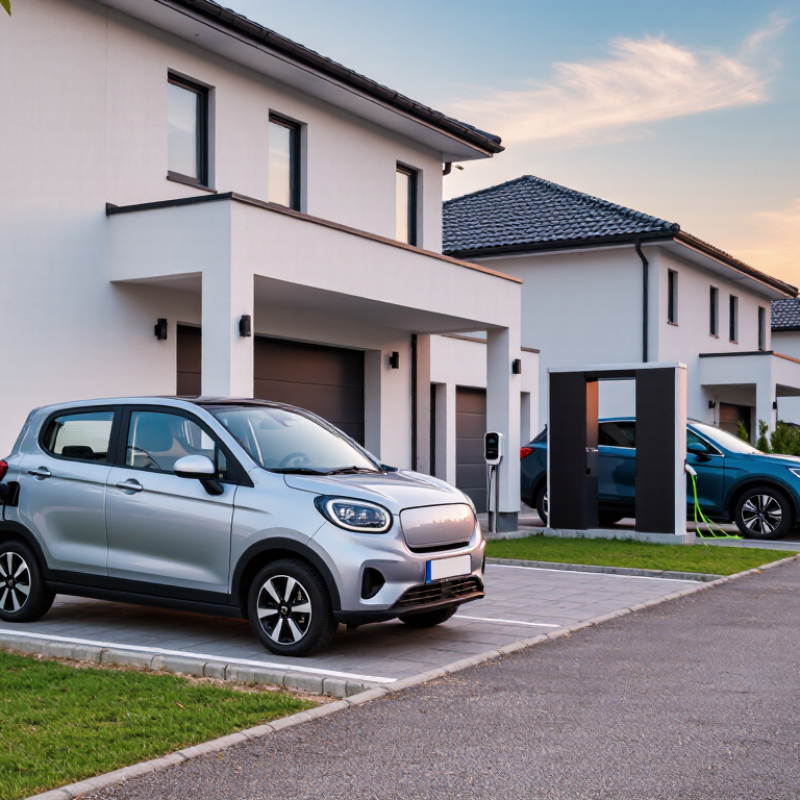
An EV charging station is equipment that safely transfers electricity to an electric vehicle. It controls current, monitors temperature, and communicates with the vehicle during charging. Unlike a basic wall outlet, it can manage power more precisely and reduce electrical stress. In a home garage, the difference may appear small. It is not.
Quality affects safety, charging speed, and daily confidence. A reliable station can stop power when it detects overheating, cable damage, or an unstable connection. Strong weather protection helps outdoor equipment handle rain, dust, and changing temperatures. Clear indicators also reduce user mistakes. These features are practical, not decorative. For a sound choice, check safety certification, weather resistance, cable strength, warranty terms, and installation instructions. A qualified electrician should confirm the circuit can support the selected power level. Older wiring may create limits that product descriptions do not reveal.
Higher power is not automatically better. Your vehicle and electrical service determine the useful charging speed. A station may charge quickly but provide poor support when an error appears. That trade-off deserves attention. Even dependable equipment can develop faults, and users sometimes ignore warning signs. Regular inspection of the plug, cable, and mounting area remains necessary. I would not treat any charging station as completely maintenance-free. That assumption is convenient, but it can be wrong.
Choosing the best EV charging station starts with matching speed to daily driving, not chasing the highest number. In practice, power is measured in kilowatts (kW). Charging time also depends on battery size, temperature, and onboard limits. An 11 kW AC station may suit overnight home charging. That is often enough. A DC fast charger can deliver much higher output, but installation costs and grid capacity may rise sharply.
Compare the station’s maximum output with your EV’s acceptance rate. A 22 kW unit will not charge a car faster if it accepts only 11 kW AC. For public charging, check the charging curve, not just peak power. Some vehicles reduce power after the battery reaches a high charge level. This matters during road trips. I once focused too much on peak kW and overlooked the slower final phase.
Connector compatibility is equally important. Verify the plug standard, socket type, cable arrangement, and regional requirements before buying. A compatible connector does not guarantee a safe installation. Use the vehicle manual, station documentation, and advice from a qualified electrician. Also measure cable reach from the parking position, especially when the inlet sits near a rear wheel. Weather protection, load management, and clear status indicators improve daily reliability. Cable length is easy to underestimate. A small planning mistake can become a daily inconvenience.
| Charging Category | Typical Input and Power Output | Approximate Range Added per Hour | Typical Charging Time | Common Connector Types | Best Use Case | Important Selection Factors |
|---|---|---|---|---|---|---|
| AC Level 1 | Single-phase household supply; approximately 1.2–1.9 kW in North America, depending on voltage and circuit rating. | Approximately 3–8 km (2–5 miles) per hour, depending on vehicle efficiency. | Often 30–60 hours for a full charge from near empty for a typical battery-electric vehicle. | Standard household plug connected to the vehicle's AC charging inlet; plug design varies by market. | Overnight charging, plug-in hybrids, and drivers with low daily mileage. | Confirm circuit safety, outlet condition, cable protection, and whether the outlet can support continuous high-current use. |
| AC Level 2 | Approximately 3.7–22 kW. Actual delivered power is limited by the vehicle's onboard AC charger and the available electrical supply. | Approximately 20–130 km (12–80 miles) per hour. | Commonly 4–10 hours for a full charge, depending on battery capacity, vehicle limits, and starting state of charge. | Type 1 or Type 2 AC connector, depending on region and vehicle; connector compatibility must be checked before purchase. | Homes, workplaces, hotels, apartments, and long-stay public parking. | Compare circuit capacity, maximum station output, vehicle AC charging limit, cable length, installation requirements, and load-management features. |
| DC Fast Charging | Typically 24–150 kW for many public units; some newer units can deliver more than 150 kW. Vehicle and battery limits may reduce actual power. | Approximately 100–800 km (60–500 miles) per hour under suitable conditions; the rate is not constant throughout the session. | Often 20–60 minutes to reach approximately 20%–80%, subject to battery size, temperature, charging curve, and vehicle acceptance rate. | CCS or another regional DC fast-charging connector; some vehicles use a dedicated regional standard. | Road trips, fleet turnaround, emergency charging, and locations where vehicles stop briefly. | Check vehicle DC charging compatibility, maximum acceptance rate, cable cooling, payment method, station reliability, and site electrical capacity. |
| High-Power DC Charging | More than 150 kW, with some systems rated up to approximately 350 kW or higher. The vehicle may accept substantially less. | Potentially more than 800 km (500 miles) per hour under ideal conditions, but real-world performance varies significantly. | Approximately 15–40 minutes for a partial charge on vehicles designed for high-power charging; charging slows near a high state of charge. | High-power versions of regional DC standards, such as liquid-cooled CCS cables where required. | Highway corridors, commercial fleets, and time-sensitive charging stops. | Do not select by rated kW alone. Compare the vehicle's peak and sustained charging rate, battery preconditioning support, stall sharing, and installation cost. |
| Fleet or Multi-Port Charging | Power may be dynamically shared across several ports; the advertised total capacity may not be available to every vehicle simultaneously. | Depends on the number of connected vehicles, load-management settings, and each vehicle's charging limit. | Varies from several hours for managed AC charging to under an hour for compatible DC charging. | Multiple AC and/or DC connector standards may be installed to serve different vehicles. | Workplaces, apartment buildings, depots, rental facilities, and commercial parking sites. | Evaluate simultaneous charging capacity, smart load balancing, access control, cable reach, billing, uptime monitoring, and future expansion. |
Choosing an EV charging station means examining safety before speed or appearance. The International Energy Agency reported over 14 million electric cars were sold globally in 2023. Public charging points also exceeded four million. More daily charging increases the value of dependable protection.
Look for residual-current detection, ground-fault protection, overcurrent control, and temperature monitoring. These features can stop charging when a cable, socket, or circuit behaves abnormally. A certified enclosure with weather resistance matters outdoors, especially near rain, dust, or freezing conditions. The U.S. Department of Energy recommends using properly rated equipment and professional installation through its Alternative Fuels Data Center guidance. Do not treat certification as decoration. It is evidence worth checking.
Smart functions should solve real household problems. Dynamic load balancing can reduce pressure on a limited electrical connection. Scheduled charging may use cheaper nighttime electricity. Energy metering, access control, fault alerts, and automatic software updates improve daily oversight. Open communication standards can also support future energy systems. Yet “smart” does not always mean secure. I still prefer clear privacy settings and local manual control. A failed internet connection should not leave the charger useless.
Tips: Check the station’s current rating against your vehicle and home circuit. Inspect cable thickness, connector temperature, and emergency shutoff access. Ask for installation records. Review independent test reports, not only marketing claims. One detail is easy to miss: confirm whether protection resets safely after a fault. The IEA’s Global EV Outlook 2024 shows rapid infrastructure growth, but faster growth can expose weak installation habits. Better hardware cannot correct poor wiring.
Why Choose the Best Charging Station for EV?
A reliable charging station begins with careful installation, not attractive design. A qualified electrician should check circuit capacity, cable size, grounding, and local electrical requirements. An overloaded circuit can cause heat, interruptions, or unsafe charging. The wall surface also matters. Loose mounting may create vibration and strain the cable connection. Installation quality quietly shapes daily charging performance.
Location changes the charging experience. Place the station near the parking position, but avoid sharp cable bends and standing water. Shade can reduce heat exposure during summer charging. Outdoor units need suitable weather protection. Keep the cable away from walkways, vehicle tires, and children’s play areas. A perfect location is difficult. Practical access matters more than visual symmetry.
Tips: Measure the parking distance first. Leave gentle cable slack. Check indicator lights monthly. Stop using damaged cables. Arrange professional inspections when faults repeat.
Maintenance protects consistent charging over time. Wipe dust from the connector with a dry, clean cloth. Inspect the cable for cuts, flattening, or unusual warmth. Check the mounting screws after severe weather or vibration. Software updates may improve communication between the station and vehicle, but updates should follow approved instructions. A station can look normal while its connection weakens. That detail is easy to miss. Keep a simple maintenance record, even if it feels unnecessary.
Choosing a charging station starts with your EV, not the charger’s advertised speed. Check the vehicle’s connector, maximum AC input, and DC charging capability. A station rated at 11 kW cannot make an EV accept 11 kW if its onboard charger supports less. Match the equipment to your daily distance, parking time, and electrical supply.
The International Energy Agency reported more than four million public charging points worldwide at the end of 2023, with installations growing by about 40% that year. More options do not always mean better choices. For overnight home charging, a reliable AC unit may be enough. Drivers covering long routes need dependable DC fast charging and a cable that reaches the vehicle without stretching across a walkway.
Measure the parking space.
Also inspect the circuit capacity, weather protection, cable length, and safety certification. In the United States, the Department of Energy’s Alternative Fuels Data Center emphasizes checking connector compatibility and charging-network availability before purchase. That advice matters when traveling between regions with different plugs or payment systems. Load management can prevent a charger from overloading a busy household panel, but installation still requires qualified electrical work.
I have seen people prioritize peak kilowatts and overlook winter performance, software reliability, or awkward cable placement. That is an easy mistake. Charging needs change with commutes, guests, and future vehicles. A modest station installed correctly may serve better than a powerful unit that remains inconvenient or underused. I would also verify warranty terms and support response times before treating a specification sheet as proof of reliability.
Choose charging power according to your vehicle's onboard charger, daily mileage, parking time, and long-distance driving needs.
Level 1 charging typically supplies about 1.4 kW, Level 2 charging commonly provides around 7.2 kW, and DC fast charging ranges from approximately 50 kW to 150 kW or more. Actual charging speed depends on the EV's charging limit, battery condition, temperature, and charging-session power tapering. Level 1 is suitable for low daily mileage, Level 2 is practical for regular home or workplace charging, and DC fast charging is best for time-sensitive travel.
An 11 kW AC station often suits overnight charging. It can cover daily driving without demanding the highest output. More power is not always better.
No. The vehicle’s onboard charger may accept only 11 kW AC. In that case, a 22 kW station will not reduce charging time.
Battery size, temperature, and the vehicle’s charging limits all matter. DC charging may slow near a high battery level. Peak power is only one part of the picture.
Confirm the plug standard, socket type, cable arrangement, and regional requirements. Check the vehicle manual and station documents. A matching connector does not guarantee a safe installation.
Measure from the parking position to the vehicle’s charging inlet. Pay special attention when the inlet sits near a rear wheel. Cable length is easy to underestimate.
Look for residual-current detection, ground-fault protection, overcurrent control, and temperature monitoring. These features can stop charging during abnormal conditions. Protection matters more than appearance.
Yes. A certified, weather-resistant enclosure helps protect against rain, dust, and freezing conditions. Outdoor equipment still needs proper wiring and professional installation.
Dynamic load balancing can reduce pressure on a limited home connection. Scheduled charging may use lower-cost nighttime electricity. Energy metering, fault alerts, and manual control improve daily oversight.
It should retain basic local control when the connection fails. Clear privacy settings are also important. Smart is not automatically secure.
Check the station’s current rating against the vehicle and home circuit. Inspect cable thickness, connector temperature, and emergency shutoff access. Ask for installation records and independent test reports. I once focused too much on peak power and missed the slower final phase.
Choosing the best Charging Station For Ev begins with understanding how it supplies electricity to your vehicle and why quality matters. A well-designed station can provide stable power, efficient charging, and reliable long-term performance, while the wrong choice may lead to slower charging or compatibility problems. When comparing options, consider charging speed, power output, connector type, and whether the station matches your vehicle’s requirements and battery capacity.
Safety and convenience are equally important. Look for features such as overcurrent protection, temperature monitoring, secure connections, and automatic fault detection, along with smart functions like scheduling, energy monitoring, and remote control. Installation location, electrical capacity, weather protection, and regular maintenance can also affect charging performance. Ultimately, the right station should fit your daily driving distance, parking environment, budget, and future charging needs, providing a safe, practical, and dependable experience.
