
Top 10 100kW EV Charging Stations for Global Buyers

Time:2026-11-06 Author:Sienna
0%

Choosing a 100kw Ev Charging Station is not just about finding the highest power rating. Global buyers must consider vehicle compatibility, site capacity, operating conditions, and the support available after installation. A charger may look impressive on a specification sheet yet perform differently at a busy depot or roadside stop. Small details matter: connector types, cable reach, screen visibility in bright sunlight, and how quickly service teams can respond.

This guide reviews 10 charging stations for buyers comparing products across markets. It focuses on practical specifications, including rated output, installation needs, connectivity, safety features, and warranty information. Availability and configurations can vary by region, so buyers should confirm current product documentation with manufacturers or authorized suppliers. Check the intended vehicles and local electrical requirements before making a purchase. That step can prevent costly surprises.

There is no perfect shortlist. Some models may offer stronger software, while others may be easier to service or better suited to a particular site. Weighing those trade-offs is more useful than treating one feature as decisive. The right choice depends on how and where the charger will operate. A little uncertainty remains until the equipment is tested in real conditions.
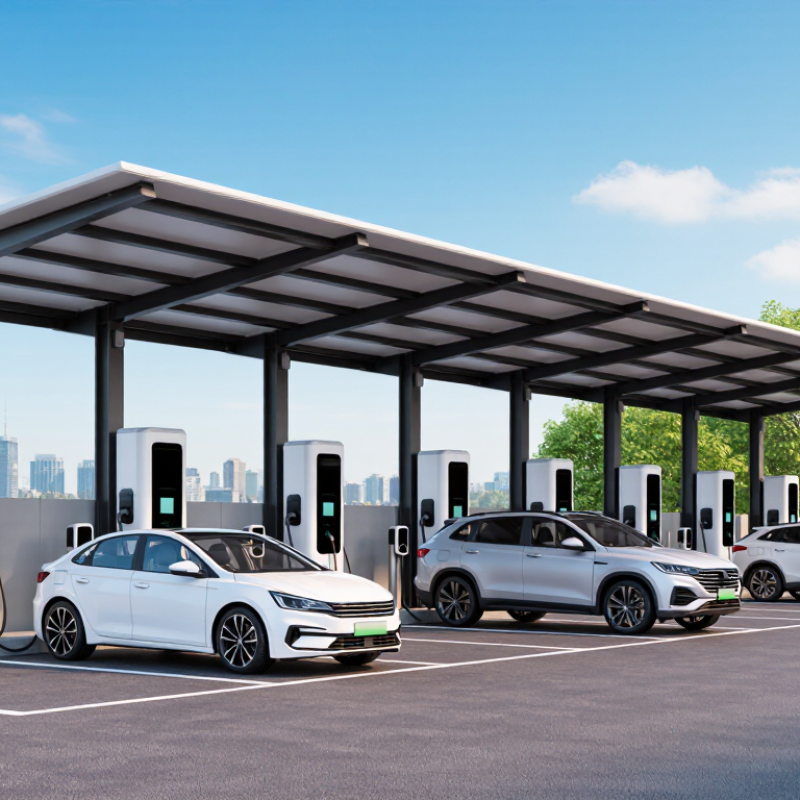
Top 10 100kW EV Charging Stations for Global Buyers

What Defines a 100 kW EV Charging Station?

A 100 kW EV charging station is a direct-current fast charger rated to deliver up to 100 kilowatts to a compatible vehicle. It converts incoming site power into controlled DC output, while the vehicle’s battery management system sets how much power the battery can accept. That rating is a ceiling, not a promise. A car arriving with a warm, nearly full battery may charge far below it.

Real charging speed depends on the vehicle, battery temperature, state of charge, and available site power. Some stations also share power between connected vehicles. A 100 kW unit might therefore provide less than 100 kW at a particular connector. Small detail, big difference.

For buyers, the rating is only one part of the specification. Check the supported voltage and current range, connector options, cable handling, cooling, and protection against dust or water. Clear status displays and reliable remote monitoring also help operators spot faults and track sessions. At busy sites, load management can prevent several chargers from drawing more power than the grid connection allows. Installation conditions matter too; a compact unit may still need substantial electrical capacity and room for service access. Specifications can look neat on paper, but actual performance deserves verification under local operating conditions.

Key Specifications, Connectors, and Vehicle Compatibility

When comparing ten 100 kW EV charging stations, look beyond the headline power rating. It usually describes peak output, not the speed every vehicle will receive. Check the station’s voltage range, maximum current, and whether power is shared between two connected cars. A broad voltage range can support more battery systems, but the vehicle still sets its own charging limit. Check the plug.

Connector choice affects real-world access. CCS1 is common in North America, while CCS2 is widely used in Europe and many other markets. CHAdeMO remains relevant for some vehicles, though availability varies by location. Confirm the connector on the car and the station before purchase; an adapter does not guarantee full charging performance. Cable reach matters, too. A short cable can make a compatible charger awkward to use when the parking bay is tight.

Vehicle compatibility also depends on battery temperature, state of charge, and the car’s charging curve. A vehicle rated for less than 100 kW will not charge faster just because the station can provide more power. Near a busy site, two cars may share output, so ask how the unit manages simultaneous charging. A specification sheet can look reassuring and still leave practical questions unanswered. Compare measured performance, connector options, and clear operating documentation before choosing.

Top 10 100 kW EV Charging Stations for Global Buyers

For global buyers, a 100 kW EV charging station can balance charging speed, site capacity, and installation cost. Yet the number on the cabinet is only a peak rating. A vehicle may draw less power because of battery temperature, state of charge, or its own charging limit. The IEA’s Global EV Outlook 2024 reports that public fast-charger stock grew by 55% in 2023. That growth makes practical comparisons more useful than headline power alone. Check connector options, input-voltage range, output sharing, and whether the unit can operate reliably in local heat, cold, or dust.

Tips: Request test results at high ambient temperatures. Confirm cable reach with vehicles parked in real site layouts. Ask how quickly technicians can replace common parts.

Before selecting a station, review its efficiency, protection rating, communications compatibility, and maintenance requirements. Also check grid capacity: a 100 kW charger can place a substantial demand on a small commercial site. Compare installation drawings and commissioning support, not just equipment prices. A polished specification sheet can still conceal awkward cable placement or unclear service procedures. That is easy to overlook. Regional requirements differ, so buyers should verify applicable technical standards with qualified local professionals before purchase.

Regional Standards, Installation, and Operating Requirements

A 100 kW charging station needs more than a suitable connector. Buyers should confirm the regional plug standard, vehicle communication protocol, and payment options before ordering. These details can vary between markets, even when the charger’s power rating is identical. Check them early.

Installation starts with the site’s electrical capacity. A qualified local electrical professional should assess the supply, protective devices, cable routes, grounding, and any required utility upgrades. At 100 kW, a weak connection or undersized cable can limit performance or cause avoidable downtime. Allow room for ventilation and service access, too.

Site conditions matter. A charger placed beside a busy curb needs different cable management than one installed in a sheltered depot. Consider rain, dust, heat, vehicle turning space, and the distance to the electrical room. Drawings can look tidy; real parking bays often do not. That gap deserves a site visit.

Operating requirements also include network connectivity, software compatibility, fault monitoring, and maintenance access. Confirm which local certifications and inspection steps apply, rather than assuming one approval covers every region. Keep spare parts and response times in the plan. They are easy to overlook. Pilot the installation at one site, record charging sessions and faults, then adjust settings before wider deployment. A 100 kW rating is only useful when the site can deliver it consistently.

Top 10 100kW EV Charging Stations for Global Buyers — Regional Standards, Installation, and Operating Requirements

No. Market / Regional Configuration Common DC Connector Relevant Standards and Rules Typical Power-Supply Considerations Installation Requirements Operating Requirements
1 European Union CCS Combo 2 (CCS2) is the common public DC configuration. IEC 61851-1 and IEC 61851-23/-24 cover EV conductive charging equipment and DC charging communication. Connector requirements are addressed in IEC 62196. A 100 kW DC output requires more than 100 kW of AC input because of conversion losses. Confirm the available three-phase supply, transformer capacity, and utility connection at the site. Use locally compliant switchgear, protection, earthing, cable routing, and accessibility provisions. Obtain required permits and coordinate the grid connection with the distribution network operator. Check vehicle compatibility and connector condition. Configure user access, payment, pricing display, and public-charging data services to meet applicable national and EU requirements.
2 United Kingdom CCS Combo 2 is widely used for public DC charging; confirm vehicle compatibility. BS EN IEC 61851 is used for charging equipment requirements. BS 7671, including Section 722, addresses electrical installations supplying EV charging equipment. Assess the site’s three-phase capacity and the distribution network operator’s connection conditions. Allow for input losses and any other simultaneous site loads. Installation should be designed and verified by competent electrical professionals, with suitable overcurrent protection, earthing, isolation, and mechanical protection. Provide clear pricing and operating information where required. Plan for fault reporting, remote monitoring, maintenance, and safe isolation during service.
3 United States CCS Combo 1 (CCS1) and SAE J3400 connectors may be encountered; select according to the target vehicle fleet. NFPA 70 (the National Electrical Code), especially Article 625, covers EV power-transfer systems. UL 2202 is a relevant safety standard for DC charging equipment; local authorities having jurisdiction determine applicable requirements. Three-phase 480 V service is common for commercial sites but is not available everywhere. Verify the service, transformer, utility approval, and equipment input requirements. Secure permits and inspections as required by the local authority. Provide code-compliant disconnects, grounding and bonding, overcurrent protection, and accessible equipment clearances. Set connector options to match the intended vehicles. Confirm payment, accessibility, signage, and network requirements for the site and state or local jurisdiction.
4 Canada CCS1 is common, with SAE J3400 availability increasing; confirm local vehicle and site requirements. CSA C22.1 (Canadian Electrical Code), including Section 86, addresses EV energy management and charging installations. Applicable product certification and provincial or territorial rules must also be checked. Confirm service voltage, phase availability, winter operating conditions, and utility capacity. A site load calculation should account for the charger and other building loads. Use equipment accepted by the relevant inspection authority. Protect exposed equipment and cables from local weather, snow clearing, and vehicle impact. Establish cold-weather inspection and maintenance procedures. Check cable flexibility, connector condition, communications, and any site-specific accessibility or payment obligations.
5 China GB/T DC charging connector. GB/T 20234.3 addresses DC charging couplers; GB/T 18487.1 covers conductive charging systems; GB/T 27930 addresses communication between off-board chargers and vehicles. Confirm the local three-phase supply, distribution capacity, and utility connection conditions. Check that the charger’s rated input and protection settings match the installation. Follow applicable national and local electrical, fire-safety, civil, and grid-connection requirements. Verify communications compatibility as part of commissioning. Use the appropriate charging communication profile and local payment or platform integration. Monitor connector temperature, insulation status, alarms, and equipment availability.
6 Japan CHAdeMO is an established DC option; confirm the connector required by the intended vehicles, including imported models. Applicable Japanese electrical installation and safety rules must be followed. CHAdeMO interoperability and equipment requirements should be verified for the selected charger and vehicle fleet. Check the site’s available voltage, phase, transformer capacity, and utility approval. Do not assume that a supply arrangement used in another market is available at a Japanese site. Use locally qualified electrical contractors and meet applicable grounding, protection, seismic, and weather-exposure requirements for the location. Verify vehicle-to-charger communication and emergency-stop operation. Provide inspection and maintenance procedures suited to the site’s environment and public access.
7 South Korea CCS Combo 1 (CCS1) is a common public DC configuration; check the target fleet before purchase. Relevant KS standards and applicable IEC 61851 requirements should be checked alongside Korean electrical safety, installation, and site approval rules. Confirm local service voltage, available three-phase capacity, and utility requirements. Account for charger input power and building loads when sizing the connection. Use appropriately licensed local installers. Confirm electrical protection, earthing, fire-safety provisions, equipment clearances, and any local permitting requirements. Test vehicle communication, payment or access functions, remote monitoring, and emergency procedures before opening the site to users.
8 India CCS Combo 2 (CCS2) is commonly used for high-power public DC charging. The IS 17017 series covers EV conductive charging systems and related requirements. Applicable Central Electricity Authority regulations, state rules, and local electrical-inspector requirements should also be checked. Assess the local distribution supply, transformer capacity, voltage variation, and utility connection process. Consider other site loads and any planned load management. Use compliant switchgear, earthing, protection, cable management, and weather protection. Confirm local approvals and provide safe vehicle and pedestrian circulation. Plan for heat, dust, monsoon exposure, and service availability. Monitor alarms and connector condition, and maintain a clear process for user support and fault response.
9 Australia CCS Combo 2 (CCS2) is the common public DC configuration. AS/NZS 3000 applies to electrical installations; IEC 61851 is relevant to EV charging equipment. Confirm current Australian Standards and state or territory requirements for the project. Check the site’s three-phase supply and network-service capacity. Utility approval, demand management, and transformer upgrades may be needed depending on the site. Provide compliant electrical protection, earthing, isolation, impact protection, and weather-rated installation. Meet local building, accessibility, and planning requirements. Set up suitable monitoring and maintenance. Account for local heat, UV exposure, dust, and coastal conditions when selecting enclosure protection and inspection intervals.
10 Gulf markets CCS Combo 2 (CCS2) is common in many deployments; verify the country, utility, and vehicle requirements. IEC 61851 is widely referenced, but electrical, civil, fire-safety, and utility rules vary by country and local authority. There is no single installation rule that applies uniformly across all Gulf markets. Confirm local grid capacity, service voltage, utility connection approval, and any demand-management requirements before selecting the site. Specify equipment suitable for high ambient temperatures, dust, and direct sun exposure. Confirm enclosure rating, ventilation or thermal management, cable protection, and local civil-defense approvals. Use a preventive-maintenance schedule for filters, cooling systems, connectors, and protective devices. Track temperature alarms and verify reliable operation during peak heat.

Buyer note: These are regional reference configurations, not a ranking of specific products. A 100 kW DC output rating does not specify the required AC service capacity: input demand depends on conversion efficiency and equipment design. Final connector selection, electrical sizing, approvals, and operating obligations must be verified for the exact site and jurisdiction.

How to Compare and Select a 100 kW Charging Station

Top 10 100kW EV Charging Stations for Global Buyers

How to Compare and Select a 100 kW Charging Station

A 100 kW rating is only a starting point. Check whether the unit delivers that power to one vehicle or divides it across two connectors. Compare connector types and confirm compatibility with the vehicles in your market. Battery voltage also matters: a vehicle may not accept the station’s full rated output. Review input-power requirements, too, especially if the site has limited grid capacity. A specification sheet can look tidy while the cable barely reaches a parking bay.

Tips: Ask for test data showing output across different battery voltages and temperatures. Check operating temperature range, enclosure protection, warranty terms, and local access to replacement parts. If the site needs remote monitoring, confirm the supported communication protocol and what data operators can actually retrieve. Small details count.

Consider the whole charging experience, not just peak speed. Look at screen visibility in bright sun, cable weight, connector storage, and emergency-stop placement. Ask about maintenance intervals and expected service response times. Compare total installation and operating costs, including electrical upgrades. A lower purchase price may not mean lower costs over five years. I would still verify real-world performance with a reference site; published figures do not tell the whole story.

Top 10 100 kW EV Charging Station Considerations for Global Buyers

Current required to deliver 100 kW at different DC output voltages

Values are calculated using power = voltage × current. Actual charging performance depends on the vehicle’s battery voltage range, charger and cable current limits, temperature, and battery charging curve. When comparing stations, check that their output voltage and current ranges match the vehicles and markets you serve.

FAQS

Does a 100 kW rating guarantee every vehicle will charge at 100 kW?

No. It describes the station’s peak output. The vehicle may draw less because of its charging limit, battery temperature, or state of charge.

Can two vehicles charge at full power at the same time?

Not always. Some stations divide power between connected vehicles. Ask how output is shared before planning a busy site.

How should I check connector compatibility?

Match the station’s connector to the vehicle and local market. Check before purchase. An adapter may not provide full charging performance.

Why does the station’s voltage range matter?

It affects which vehicle battery systems the station can support. A suitable range still cannot override the vehicle’s own charging limit.

What should I check about the charging cable?

Measure cable reach against real parking spaces. A short cable can make a compatible station awkward to use. Cable weight matters, too.

Can a site’s electrical supply affect installation?

Yes. A 100 kW station can place substantial demand on a small commercial site. Check grid capacity and possible electrical upgrades.

Which operating details are easy to overlook?

Check performance in local heat, cold, or dust. Review enclosure protection, screen visibility, connector storage, and emergency-stop placement. Small details count.

What should I ask about maintenance and monitoring?

Ask about replacement parts, service response times, and maintenance intervals. Confirm which communication protocols are supported and what data operators can retrieve.

Are published specifications enough to choose a station?

Not entirely. Request test results across temperatures and battery voltages, then check a reference site if possible. I might still miss a practical issue.

Conclusion

A 100kw Ev Charging Station is a high-power DC charging solution designed to add driving range more quickly than typical lower-power chargers, although actual charging speed depends on the vehicle, battery condition, and charging environment. Understanding its output range, power supply needs, connector options, communication features, and vehicle compatibility helps buyers assess whether a station suits their intended use. This overview compares ten types of 100 kW charging stations for global buyers, focusing on practical features rather than brand names.

Regional connector standards, site conditions, installation requirements, and operating needs can all affect a project’s suitability and cost. Buyers should consider available electrical capacity, expected usage, maintenance access, environmental conditions, and compatibility with the vehicles they plan to serve. By weighing these factors alongside specifications and total operating needs, businesses and property owners can make a more informed choice for a reliable charging installation.

Sienna

Sienna

Sienna is a skilled marketing professional with a deep expertise in our company’s core products and services. With a passion for innovation and detail, she plays a pivotal role in crafting insightful blog posts that not only highlight the unique features of our offerings but also provide valuable......