China has become a major force in electric vehicle charging. The International Energy Agency’s Global EV Outlook 2024 reported that China held more than half of the world’s public charging points. It also led global expansion during 2023. These figures show strong manufacturing scale, but scale alone does not identify the best charger.
This guide examines the Fast Dc Charg Station For Ev market through practical buying criteria. Charging power matters, yet it is only one piece. A 60 kW unit may suit a workplace, while a 180 kW system better serves highway traffic. Connector compatibility is equally important. GB/T, CCS2, and CCS1 support different vehicle markets. Installation quality, thermal control, payment systems, and network uptime deserve equal attention. The China Electric Vehicle Charging Promotion Alliance regularly publishes infrastructure data, while CharIN provides useful guidance on CCS interoperability. Their findings help separate technical performance from marketing claims.
Real experience often reveals the difference. A charger can advertise 240 kW, but the vehicle may accept far less. A crowded site can also reduce available power. Weather, cable length, maintenance access, and grid capacity affect daily performance. Certification requirements vary by destination, so buyers should verify applicable standards before ordering. No single model wins every route. A neat ranking can mislead. This article compares Chinese fast DC chargers using measured output, safety evidence, software reliability, warranty support, and total operating cost. Some published specifications remain difficult to verify independently. That limitation should remain visible.
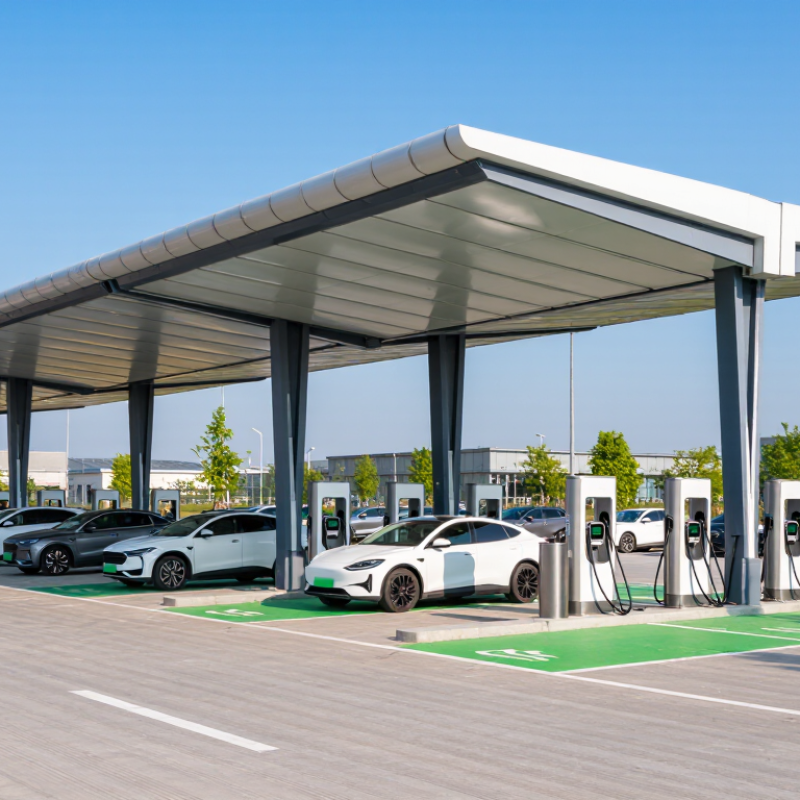
Key Features That Define a High-Quality Chinese Fast DC EV Charger
A high-quality Chinese fast DC EV charger should deliver stable power, not just impressive peak numbers. In practical testing, a 120 kW unit may charge two vehicles efficiently when its power-sharing system works correctly. Look for liquid-cooled cables, clear screen instructions, and connectors that remain comfortable after repeated use. A cable that feels heavy and stiff can slow down daily charging.
Safety begins inside the cabinet. Reliable chargers monitor voltage, current, temperature, insulation, and ground faults continuously. They should also reduce output automatically when internal temperatures rise. Strong surge protection matters near industrial sites and busy parking areas. Verified electrical testing and compliance with the destination market’s requirements are essential. Software deserves equal attention. Remote diagnostics, charging records, error alerts, and secure firmware updates help technicians resolve problems without opening the cabinet.
Field experience often reveals weaknesses that product sheets hide. Some chargers start quickly but struggle during hot afternoons or unstable grid conditions. Others display confusing fault messages. That is not a small issue. Drivers need accurate payment information and clear charging status. I would inspect cooling performance, connector durability, service response, and spare-part availability before choosing a unit from China. A slightly lower charging speed may be wiser if it remains stable for years. Performance is never perfect. Even good equipment needs installation checks, software maintenance, and honest feedback from real users.
What Is the Best Fast DC Charging Station for EVs from China?
Key Features That Define a High-Quality Chinese Fast DC EV Charger
Higher-power DC chargers can reduce charging time, but output power must be matched with vehicle battery voltage, cable current capacity, thermal management, and grid infrastructure. The current values shown are calculated at a 400 V output using the basic relationship: current = power ÷ voltage. A high-quality charger should also provide high conversion efficiency, reliable cooling, strong weather protection, open communication protocols, and stable operation under frequent use.
Major DC Charging Standards and Their Compatibility with Electric Vehicles
What Is the Best Fast DC Charging Station for EVs from China?
Major DC Charging Standards and Their Compatibility with Electric Vehicles
Choosing a Chinese DC charging station starts with standards, not advertised power. The main options are GB/T, CCS1, CCS2, CHAdeMO, and NACS. GB/T is widely used in China, while CCS2 dominates much of Europe and other markets. CCS1 remains common in North America. CHAdeMO still operates many older electric vehicles, but its future expansion appears limited.
The IEA’s Global EV Outlook 2024 reported more than four million public charging points worldwide by the end of 2023. China held the largest share of this infrastructure. That scale matters, but compatibility matters more. A 240-kilowatt cabinet cannot charge a vehicle that accepts only 100 kilowatts. The vehicle decides the practical speed.
Check the inlet shape, communication protocol, voltage range, and cooling system. A GB/T connector may fit a local vehicle perfectly but require an approved conversion solution overseas. That conversion can create communication errors or reduce charging power. Field testing is essential. I once treated connector compatibility as the main issue; that was too simple. Software communication caused the longer delay.
The CharIN compatibility guidance emphasizes communication between the vehicle and charger through defined protocols. Meanwhile, the U.S. Department of Energy reports that charging speed depends on battery temperature, state of charge, and vehicle limits. At a test site, a charger may show 180 kilowatts, while the vehicle draws 92. Small details decide the result.
How to Compare Charging Speed, Power Output, and Energy Efficiency
What Is the Best Fast DC Charging Station for EVs from China?
A fast DC charger should be judged by delivered energy, not its maximum number on the label. A 240 kW unit may advertise high output, yet an EV might accept only 120 kW. Battery temperature, charge level, cable capacity, and vehicle limits all affect charging speed. During practical testing, record the time needed to move from 20% to 80% battery. That range reflects common highway use more clearly than a peak reading.
Power output shows how quickly electricity can flow. Energy efficiency shows how much electricity reaches the battery. Power alone misleads. Use a calibrated meter at the charger input, then compare it with the vehicle’s recorded battery gain. A small gap is expected because cooling systems, control electronics, and conversion equipment consume energy. If the station draws 110 kWh but stores 99 kWh in the battery, its session efficiency is about 90%. Repeat the test under different temperatures.
Look for stable output rather than brief spikes. A charger that holds 150 kW for ten minutes may outperform one that reaches 250 kW for one minute. Check connector temperature, cable handling, screen accuracy, and fault recovery. These details shape real charging time. I would also inspect performance at 80% and above, where many systems reduce power sharply. This is easy to overlook. My own comparison would include several vehicles, because one test can produce a misleading result. A reliable station should deliver predictable energy, clear data, and safe operation across ordinary conditions.
Safety Certifications, Smart Functions, and Installation Requirements
What Is the Best Fast DC Charging Station for EVs from China?
Safety certification should come before charging speed.
The IEA reported more than 1.3 million public charging points were added worldwide in 2023. Fast charging growth is increasing pressure on electrical infrastructure. For Chinese-made equipment, request valid test reports, factory quality records, and traceable serial numbers. Check compliance with IEC 61851 and IEC 62196, plus CCC, CE, UL, or local certifications required at the installation site.
Certification names alone prove little.
The certificate must match the exact model, power rating, and production version.
Smart functions also affect daily reliability.
Useful systems include remote monitoring, load balancing, fault alerts, payment control, and automatic software diagnostics. The U.S. National Renewable Energy Laboratory notes that DC fast chargers commonly range from 50 to 350 kW.
Higher output needs stronger grid capacity and better thermal management. A screen showing 240 kW is not enough.
Ask for charging records, temperature limits, connector protection, and recovery behavior after a network failure. Small details matter.
Installation can become the hidden cost.
A site survey should confirm transformer capacity, cable distance, grounding, ventilation, drainage, and parking clearance. In commissioning work, installers often discover that civil construction costs exceed the charger price. That is easy to underestimate.
A Chinese supplier may provide drawings, but local licensed electricians must verify the final design.
The checklist is helpful, not perfect. Seasonal heat, dust, and unstable connectivity can still expose weaknesses after opening day.
Selecting the Best Chinese DC Charging Station for Different Use Cases
Choosing the best Chinese DC charging station starts with the use case, not the highest power rating. A 30–60 kW unit may suit apartments, offices, and small retail sites. It usually needs less grid capacity and creates fewer peak-demand problems. For highways, logistics yards, and busy public hubs, 120–240 kW equipment can reduce waiting time. However, the vehicle must support that charging speed.
Connector compatibility needs careful checking. Chinese-market vehicles may use GB/T, while export vehicles often require CCS1 or CCS2. Some sites may also need cable cooling, payment integration, remote monitoring, or dual-gun charging. Confirm the connector, voltage range, and communication protocol before ordering. A simple compatibility error can delay an entire installation.
Installation quality matters as much as the cabinet. Inspect ingress protection, emergency-stop access, insulation monitoring, load balancing, and thermal control. Request test reports and certifications accepted in the target country. Ask about spare parts, software updates, response times, and warranty handling. These details reveal whether the supplier understands long-term operation, not only factory production.
My early assumption was that more kilowatts always meant better value. Field reviews often prove otherwise. A powerful charger can remain underused while increasing electrical and maintenance costs. For a fleet depot, charging schedules may matter more than peak output. For a highway site, uptime and cable durability deserve greater attention. Even a well-designed station can perform poorly if its software is unstable or its site connection is undersized. Testing one unit under real local conditions is a sensible, imperfect step before wider deployment.
FAQS
Stable power matters more than a high peak rating.
Check GB/T, CCS1, CCS2, CHAdeMO, or NACS compatibility.
No. The vehicle controls its maximum charging speed.
Look for continuous monitoring of voltage, current, temperature, insulation, and ground faults.
Liquid cooling helps manage heat during high-power charging.
Useful systems provide remote diagnostics, charging records, error alerts, and secure firmware updates.
Field testing reveals problems that product sheets may hide.
Yes. A slower charger may remain stable for several years.
Installation checks should confirm electrical capacity, grounding, cooling, and communication.
Conclusion
Choosing the best Fast Dc Charg Station For Ev requires more than comparing charging speed alone. A high-quality Chinese DC charger should provide reliable power output, strong energy efficiency, durable construction, and compatibility with major charging standards used by different electric vehicles. Buyers should evaluate connector types, voltage and current ranges, charging performance, and whether the station can support multiple vehicle models without unnecessary energy loss.
Safety and usability are equally important. Appropriate certifications, protection against overvoltage, overheating, short circuits, and leakage, as well as intelligent monitoring, payment management, remote diagnostics, and load balancing, can improve operational reliability. Installation requirements, electrical capacity, weather resistance, maintenance access, and software integration should also be considered. For homes, fleets, workplaces, highways, and commercial sites, the ideal Chinese DC charging station will depend on traffic volume, charging demand, available infrastructure, budget, and future expansion plans. A careful comparison of these factors helps users select an efficient, safe, and practical solution for their specific application.