
Choosing the right Dc Vehicle Charging Station is no longer a simple matter of comparing charging speed. Global buyers must assess connector compatibility, grid capacity, software support, safety certification, and long-term service quality. A station rated at 180 kW may perform poorly if the site has weak electrical infrastructure or limited thermal management.
Herbert Diess, former Volkswagen Group CEO, captured the user expectation clearly: “Charging must be as easy as refueling.” That standard remains difficult to achieve. Drivers notice every delay, failed payment, unclear display, and unavailable connector. Fleet operators notice energy losses, maintenance visits, and software downtime. Small details become expensive at scale.
This guide reviews ten leading Dc Vehicle Charging Station options for international markets. It considers CCS2, CCS1, CHAdeMO, and GB/T compatibility, while examining power output, cabinet design, cooling systems, installation demands, and network controls. Weather resistance matters too. A coastal depot faces salt air, while a desert site may exceed 45°C.
No product fits every location. That is the uncomfortable part.
A station designed for passenger cars may not suit buses, trucks, or mixed fleets. Some models advertise impressive peak output, yet deliver less during simultaneous charging. Buyers should question those numbers. They should also verify local approvals, warranty coverage, spare-parts access, and remote diagnostics before signing a purchase order.
The strongest choices balance speed with reliability. They also leave room for future expansion. In practical terms, the best charger is not always the most powerful one. It is the one that keeps vehicles moving, supports the local grid, and remains serviceable years after installation.
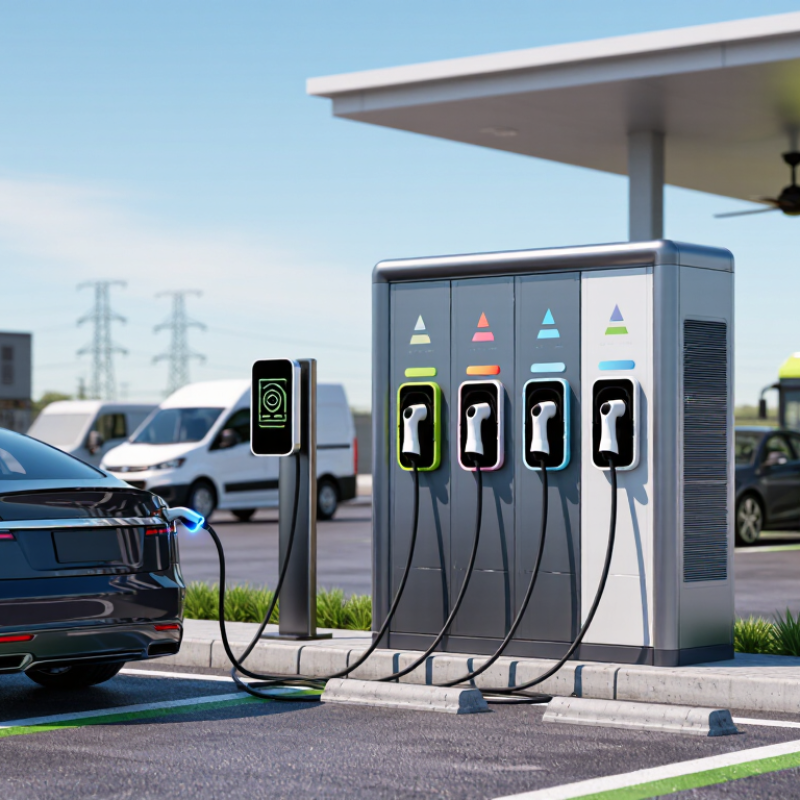
DC charging stations transfer electricity directly to an electric vehicle’s battery, bypassing the slower onboard charger. This design supports rapid charging during long trips, fleet operations, and high-demand urban parking. Power levels vary widely, from modest units for local sites to high-output systems for highway corridors. Charging speed still depends on battery temperature, vehicle limits, cable capacity, and available grid power.
Real-world planning requires more than choosing the highest rated output. A rural station may need weather protection, strong lighting, payment access, and reliable mobile connectivity. A depot may prioritize load management, overnight scheduling, and several charging ports. In hot climates, cooling systems can protect performance. In cold regions, battery preconditioning becomes important. Local electrical codes, accessibility rules, and safety certifications must guide every installation.
During site assessments, engineers often discover that parking layout causes more delays than charging power. A short cable can block an adjacent space. Poor drainage can create avoidable maintenance problems. These details seem minor, but drivers notice them quickly. Global buyers should compare energy demand, service coverage, connector compatibility, warranty terms, and upgrade options. The “best” station is not always the fastest. That assumption deserves review.
A practical comparison of generic DC fast-charging configurations for passenger vehicles, fleets, commercial sites, and regional deployments.
| Rank | Station Configuration | Typical Output | DC Voltage / Current | Common Connector Options | Best-Fit Location | Approximate Charging Use Case | Electrical Supply | Key Advantages | Important Considerations |
|---|---|---|---|---|---|---|---|---|---|
| 1 | Ultra-Fast Highway Charger | 240–350 kW | 200–1,000 V; up to 500 A | CCS1, CCS2, or regional high-power connector | Motorways, expressways, and travel plazas | Long-distance passenger vehicles and premium fleets | Three-phase medium-voltage or high-capacity low-voltage service | Very short dwell times and strong highway throughput | High grid demand, utility upgrades, cooling requirements, and demand charges |
| 2 | High-Power Multi-Port Charger | 150–240 kW total | 200–1,000 V; dynamic power sharing | CCS1, CCS2, GB/T, or mixed regional ports | Urban hubs, retail parking, and fleet depots | Two to four vehicles charging simultaneously | Three-phase AC input, commonly 400–480 V | Improves site utilization and reduces the number of grid connections | Actual power per vehicle decreases when several vehicles charge together |
| 3 | Standard Public DC Fast Charger | 60–150 kW | 200–1,000 V; 150–300 A | CCS1, CCS2, CHAdeMO, or GB/T | Public parking, service areas, and dealerships | General passenger EV charging during short stops | Three-phase AC supply where available | Balanced cost, compatibility, and installation complexity | Charging speed depends on battery state, temperature, and vehicle limits |
| 4 | Compact 30–60 kW DC Charger | 30–60 kW | 200–750 V; up to 150 A | CCS1, CCS2, CHAdeMO, or GB/T | Small towns, offices, hotels, and convenience stores | Medium-duration stops of approximately 30–90 minutes | Single- or three-phase commercial supply | Lower capital and space requirements than high-power systems | Less suitable for high-volume highway charging |
| 5 | Depot Charger for Electric Buses | 60–180 kW per vehicle | 400–1,000 V; managed current output | CCS2, CCS1, or conductive pantograph interface | Transit depots and school-bus yards | Overnight charging or scheduled turnaround charging | Dedicated three-phase infrastructure | Supports predictable fleet scheduling and centralized energy management | Requires route planning, parking controls, and substantial site power |
| 6 | Heavy-Duty Fleet Charger | 180–480 kW | 500–1,250 V; up to 600 A | High-power CCS or dedicated heavy-vehicle charging interface | Logistics centers, ports, and distribution yards | Electric trucks with fixed delivery or return-to-base routes | High-capacity three-phase or medium-voltage connection | High energy throughput and reduced vehicle downtime | Large cables, thermal management, turning space, and load planning are essential |
| 7 | Solar-Assisted DC Charger with Battery Storage | 30–150 kW DC; 50–500 kWh storage | 200–1,000 V; site-dependent current | CCS1, CCS2, or other approved regional connector | Remote corridors, microgrids, and constrained urban sites | Supplementary charging where grid capacity is limited | Grid connection combined with solar generation and battery storage | Can reduce peak grid demand and improve resilience | Output depends on solar conditions, storage size, and energy-management settings |
| 8 | Rugged Outdoor DC Charger | 60–180 kW | 200–1,000 V; up to 300 A | CCS1, CCS2, CHAdeMO, or GB/T | Outdoor parking, mining sites, and harsh climates | Reliable public or industrial charging in demanding environments | Three-phase commercial supply | Weather-resistant enclosure, cable management, and temperature control | Corrosion protection, drainage, grounding, and maintenance access must be verified |
| 9 | Modular DC Charging System | 60–600 kW scalable output | 200–1,000 V; modular power cabinets | CCS1, CCS2, GB/T, or mixed connector layout | Large charging hubs and expanding fleet facilities | Phased deployment from a few ports to many charging bays | Dedicated high-capacity three-phase or medium-voltage service | Capacity can expand as utilization grows, improving long-term planning | Requires careful cabinet placement, communications, and load-balancing design |
| 10 | Urban Destination DC Charger | 20–60 kW | 200–750 V; up to 100 A | CCS1, CCS2, CHAdeMO, or GB/T | Hotels, restaurants, workplaces, and municipal parking | Charging during shopping, dining, work, or overnight stays | Low- to medium-capacity commercial supply | Good match for longer dwell times and urban space constraints | Lower power may not meet the needs of taxis, high-mileage fleets, or quick-turnaround sites |
Global buyers should compare DC vehicle charging stations by performance, compatibility, safety, and long-term service. The first check is usable output under real operating conditions. A station rated at 180 kW may deliver less power when several vehicles charge together. Ask for measured output, temperature limits, and load-sharing data. I have seen impressive specifications fail during hot afternoons because cooling systems were poorly matched to local conditions. That gap matters.
Connector compatibility must match the vehicles and regulations in the target market. Support for widely accepted charging protocols can reduce software and installation problems. Verify communication between the charger, vehicle, payment system, and energy platform. Test this connection before purchase. Small details matter. Cable length, screen visibility, emergency-stop access, and lighting affect daily driver experience. Payment options should also follow local requirements and protect customer data.
Reliability depends on more than the cabinet design. Review ingress protection, surge protection, insulation monitoring, and emergency procedures. A unit beside a coastal road needs stronger corrosion resistance than one inside a dry depot. Request independent test reports and destination-market certifications, rather than relying only on supplier statements. Examine spare-parts availability, remote diagnostics, response times, and warranty conditions. Calculate total ownership cost, including civil works, grid upgrades, software fees, and maintenance. A lower purchase price can hide higher operating expenses. That assumption deserves challenge. Load capacity, parking patterns, and future vehicle demand should shape the final selection.
International buyers need more than high output. They need reliable compatibility, safe installation, and practical after-sales support.
The following ten DC charging station types suit different markets and operating conditions:
Selection should begin with local grid capacity and vehicle compatibility. Check voltage ranges, connector standards, communication protocols, and payment options before placing an order. A charger designed for one region may require different cables, software, or protection settings elsewhere. Confirm relevant electrical certifications, ingress protection, emergency controls, and temperature performance with qualified engineers. Installation quality matters. Poor cable routing can create heat, moisture, and maintenance problems.
In practical testing, modular systems are often easier to repair because one power section can remain active. That is useful, but not always cheaper.
High-power equipment may demand expensive transformers and stronger cooling systems.
Buyers should also inspect spare-part availability, remote diagnostics, warranty response times, and training materials. Some specifications look impressive on paper. Real charging speed may fall in heat, cold, or weak-grid conditions. That detail deserves honest attention.
Choosing among the 10 best DC vehicle charging stations requires more than comparing power ratings. Regional standards decide whether a charger can serve local vehicles. CCS1 is common in North America, while CCS2 dominates Europe and many other markets. China widely uses GB/T, and Japan still supports CHAdeMO. Connector choice matters. So does voltage.
The IEA’s Global EV Outlook 2024 reported more than four million public charging points worldwide at the end of 2023. Public charging growth exceeded 40% that year. This rapid expansion creates compatibility risks for global buyers. Check charging protocols, communication standards, and vehicle voltage ranges. ISO 15118 support can improve smart charging and future vehicle communication, but real-world compatibility is not always perfect. That deserves testing.
Tips: Request a vehicle-and-charger compatibility test before shipment. Confirm IEC 61851 compliance, local electrical approvals, grounding requirements, and enclosure protection ratings. Installation may require a transformer upgrade, three-phase supply, thermal management, and dedicated civil work. In North America, installers often review NEC Article 625 and relevant safety certification. In Europe, IEC 60364-7-722 and national grid rules are important. A 150 kW unit can still deliver less power when the battery is cold, the site is crowded, or the utility limits demand. Buyers sometimes overlook cable length and maintenance access. That is an expensive oversight. Specifications are useful, but site measurements reveal the truth.
Comparison of representative DC output ratings and indicative electrical-service capacity across regional charging standards. Connector compatibility does not determine charging power by itself; vehicle limits, grid capacity, protection systems, and local regulations must also be verified.
Planning reference: 60–150 kW systems commonly require approximately 70–175 kVA of available service, while 180–350 kW systems may require roughly 210–410 kVA before site-specific allowances. Actual installation requirements depend on conversion efficiency, power factor, simultaneous charging, transformer capacity, grounding, overcurrent protection, permits, and regional electrical codes.
Safety deserves equal attention. Look for certified electrical protection, emergency shutdown controls, insulation monitoring, surge protection, and clear cable management. Outdoor stations need weather-resistant enclosures and effective temperature control. Technicians should receive documented training and follow regional electrical standards. A charging session should feel uneventful. That is the goal. However, no safety system replaces regular inspection, especially after flooding, impact, or unusual heat.
Tips:
Request a total-cost quote, not only a purchase price. Confirm spare-part availability and response times before signing. Keep charging records, inspection dates, and fault reports. Clean connectors carefully, check cables for cuts, and test emergency controls according to the service manual. Maintenance intervals vary with traffic and climate. Dusty sites may need more frequent filter cleaning. Coastal locations can develop corrosion faster than expected. Buyers should also question optimistic uptime promises. Real performance depends on electricity quality, driver behavior, technician skill, and seasonal conditions.
It sends electricity directly to an electric vehicle’s battery. This bypasses the slower onboard charger. Charging speed varies.
They support highway corridors, fleet depots, urban parking, retail sites, and temporary charging locations. Each site has different needs.
No. Battery temperature, vehicle limits, cable capacity, and grid power also affect charging speed. The highest rating may disappoint.
A compact 30 kW unit may suit modest demand. A 40 kW wall-mounted unit can fit workshops. Actual demand matters more.
Check voltage ranges, connector standards, communication protocols, payment options, and local electrical certifications. Compatibility problems are expensive.
Parking layout, cable length, drainage, lighting, and mobile connectivity can affect daily use. Small details matter.
Hot climates may require cooling systems. Cold regions may need battery preconditioning. Weather protection remains important in both settings.
Often, one power section can keep operating while another is repaired. They are useful, but not always cheaper.
Review spare-part availability, remote diagnostics, warranty response times, and training materials. Support quality can matter more than impressive specifications.
Real charging speed may decline in heat, cold, or weak-grid conditions. Paper specifications are only part of the decision.
This guide explains how a Dc Vehicle Charging Station converts grid electricity into high-power DC energy for faster electric vehicle charging. It introduces common use cases, including highway corridors, commercial fleets, workplaces, residential developments, and public charging hubs. To compare the top ten options for international buyers, readers should examine charging power, connector compatibility, communication protocols, load management, weather protection, user interface, scalability, and support for different vehicle types. These criteria help buyers match equipment with traffic demand, site conditions, and future expansion plans.
The article also highlights regional standards and installation requirements, such as electrical capacity, grounding, permits, network connectivity, connector formats, and local certification. It reviews ownership costs beyond the purchase price, including construction, energy use, software services, repairs, and periodic inspections. Safety features such as insulation monitoring, surge protection, emergency stops, thermal control, and access management are equally important. By considering compatibility, total cost of ownership, maintenance planning, and dependable safety measures, global buyers can select a practical charging solution that supports reliable long-term operation.
